Care Without Judgement

You know how you set out to do something, and really feel strongly about its worth and the effort required, and then you just stop. Well, I suppose that’s my excuse for not attending to this blog during my travels. That and the fact that I became so ill that I had to go to the emergency room. Let’s just say that eating street food in Western Cape townships with the paramedics can be hazardous to your health. For the remainder of the trip I battled one of the worst GI illness I have had the misfortune of experiencing. It’s not an excuse, but late-night hotel room writing pretty much goes out the window when one enters nausea survival mode. So, for my one follower (hi Caroline) I am sorry. In addition, once you stop momentum, it is very difficult to reinvigorate the effort.

So, why did I choose today to take another stab? Well, I have been sufficiently motivated to speak – and this won’t be about travels or my lucky life – this is about the industry that I love, and people who don’t get mental illness.

I am sitting in a lecture today about mass causality incidents, specifically the Las Vegas concert shooting. This is an area of my field that I am passionate about, partly because its dynamic and interesting, but mostly because it is an area of emergency services that is in the process of being completely renovated. These events are a moving target, both the type of incident and the way we respond are constantly evolving. Unfortunately this nature of constant change, in addition to many structural hurdles, make efficient response very difficult. But, I am not going to write about MCIs today (I will bore you all with that topic in 6 months when I get back to this blog again).

When was the last time you heard anyone refer to a mentally ill person as a “nut job?” I would imagine it happens a lot less today than maybe it did 20 years ago, as our stigma towards the mentally ill is eroded by an understanding that mental illness is really just illness. Our society is beginning to realize that, just like cancer or heart disease, mental illness and its effects are not within the control of patients. I think this is a relatively safe assumption, if you disagree I am all ears. Ok, now that we all agree on that tidbit, would it surprise you to hear that in this lecture an emergency physician continues to use the words “nut job” to refer to a mentally ill person, before a group of paramedics and EMTs? Herein lies, in my estimation, one of the greatest problems in the medical and emergency response industries.

Ok, let’s take a perspective break, because most of you probably cannot fathom that this is true. You ask yourself, how could a doctor marginalize a patient like this? What about the hypocritic oath? How could this be a beneficial example to set for a room full of emergency responders? Let me clear it up for you, the mentally ill person he is referring to also happens to be the active shooter.

I am now ready for you to become disengaged from this blog, deem me an idiot, and move along. If you must I totally understand, my opinion is one that is on the fringe, but if you are still here, hear me out for the sake of our collective psyche.

One of the great challenges of the emergency response industry in this day and age is stress. It has even been called an epidemic, and it extends beyond EMS, or Fire and Law. We are having parallel national conversations about suicide and drug addiction. Increasing suicide rates within historically stalwart institutions like the US military and fire service are causing us to scratch our heads. Desperate people are increasingly killing other innocent people and themselves in large scale shootings. What is the common theme amongst all of these people: isolation in mental illness, that festers untreated until it volcanically erupts in violence. We ask ourselves what we can do to identify these people and get them the care that they need, prevent the destructive cycle of substance abuse and depression that contribute to the downward spiral. How can we impact the loneliness and desperation that occurs in those we know intimately, that we spend hours and hours with at work? I will tell you what we can do, we can take the first step by categorically rejecting the idea that it is ok to disparage those will mental illness, no matter what situation we may find them in, period.

Imagine for a second, sitting in a room, struggling to cope with mounting feelings of stress and isolation. Your thoughts dominated with images of trauma, sadness, and depression. Tasting the acidic aftermath of a night of self-medication, bloated, nauseous, and exhausted. Feeling as though no one else could possibly understand, and there is no escape. Dreading the next time you must go to work and stifle your growing rage. All the while listening to one of the premiant leaders in your field, a physician who you rely on to guide you professionally, disparaging the mentally ill. Painting the portrait that your feelings are wrong, that they should be hidden from the light, that your colleagues will see you as weak, incapable of enduring what they can endure. You have to start asking yourself, “what is wrong with me?” – “Am I a nut job?”

It is easy to see how this cavalier dismissal of one’s humanity, no matter their crime, has infected our responders with the idea that mental illness is equivalent to weakness and inability. The idea that those who are captured by feelings of despair and sadness, or the reliance on substances to cope, are broken. How can we deliver the message that our colleagues are safe in seeking help, when in the same breath we dehumanize mental health patients?

While this example is dramatic evidence of the problem, it is certainly not isolated. I submit that we, through our day-in-day-out dismissal of mental health and substance abuse patients are moving toward a critical juncture in our industry. Every frustrated interaction with a drunk, or compartmentalized memory of a suicide victim. The insulation we build, “how could he do this, must have been crazy – a nut job.” Or the jokes, “really – you thought that would kill you, come on.” “Can you believe they called us, for this – grow up.” On a daily basis our providers are on the front lines of mental illness and substance abuse, using the only these tools to manage the sad humanity to which they are exposed.

It is imperative that we immediately change the paradigm in our industry to dismiss the criticality and humanity of these patients, if not for them, for us. The idea that ‘gallows humor,’ insulation, and dismissal are effective strategies is not only incorrect, but may be weakening our ability to cope. Even more impactful, our tendency to minimize, marginalize, and dismiss the impact of this structure may be reducing our ability to care for our own colleague’s stress. It is high time that we make a concerted effort to remove judgement from care, setting the example for ourselves that mental illness is just that, illness.

Print.jpg

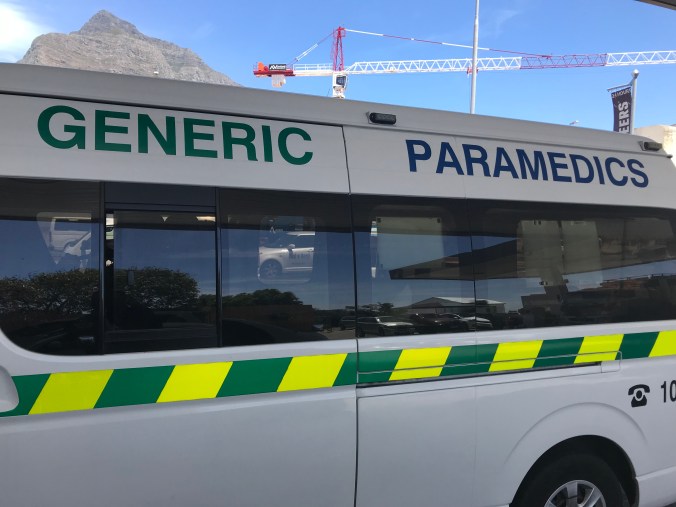
I rode with the paramedics today, this was one of the services we came across.  I need some time to process today’s experience before I can write anything. It was intense.IMG_7052.jpg

The haves and the have nots

I grew up in a typical American town, as far as I knew, there wasn’t much there that differed from say – Columbus or Denver. Being sheltered as a child is probably not all that unusual, especially in the United States, but aside from a bit of heightened fear of crime, my New Orleans upbringing was typically American. It wasn’t until I became a paramedic in the city that I realized that New Orleans was two places, one for white people, and one for black. It was probably this realization of the stark economic division in the city that drove me away. And really, it’s not that Denver doesn’t have its fair share of divisions along racial lines, it’s that they are far less prevalent. Being a paramedic in New Orleans always gave me, what I thought, was a clear view of poverty and the dirty secret it can sometimes be in a city.

I started my Monday out at a coffee shop near my hotel called “Brownies and Downies.” I had no idea what that meant, but it was close and I was in need of caffeine. I have to say, I love when American political correctness is exposed for what it is, an exercise in sterilizing situations of their truth. I say this because “Brownies and Downies” is a coffee shop where waiters with Down’s Syndrome serve coffee and brownies. Can you imagine a US non-profit that provided work training to this population calling themselves Downies? Their name aside, they are providing real work experience and income to a population that desperately needs it, and serving one hell of a yogurt parfait (I needed the probiotics).IMG_7047

The thing about income inequality is, as a society moves towards having deep chasms between economic and social classes, those people within the classes lose the ability to imagine lives in the others. In Cape Town, there are neighborhoods where millions of people live without running water, in tin shacks while millions drive past them every day on the highway – few ever experience their reality. Driving past these places on Monday, one can only catch a glimpse and imagine what life might be like. And as we enjoyed our wine tour of Stellenbosch, sipping out of crystal classes on beautiful verandas, we are far outside the contemplation of a member of Cape Town’s impoverished population.Winery

Thus far, on the surface, Cape Town has been a magically wonderful place to visit. And, honestly, aside from some colorful tin on the highway, I have been completely isolated from its truly horrific poverty. I am reminded of my childhood in New Orleans, how people can feel as though they are part of a solution – or at least supporting their fellow, man by purchasing a cup of coffee. But the reality is the people facilitate their lifestyle of verandas and $1000 hats are literally starving to death, just out of earshot.

Today I ride with the paramedics in the hopes of better understanding the whole story.


Get yourself a great wife

Nobody ever gave me this advice, but probably because I tend to get lucky, I have the greatest wife. This is one of those statements that is often made, not easily supported with evidence. Well guess what? I have proof.

Having to leave your family for an extended period of time is something that, I would guess, nobody ever gets used to, and I was fairly nervous about being away from Melissa and Wyatt before this trip (I am getting to the proof part). My wife, with her tireless effort and patience for me, was nothing but supportive, really eliminating anything logical that would direct this anxiety. As anxiety goes, though, it remained, making the last few weeks, and really the last few days, a bit difficult. Newsflash: Its really fucking hard to leave your kid, even for short and worthwhile events. So what does my wife do to help alleviate this anxiety? She does this amazingly simple and monumentally impactful thing:

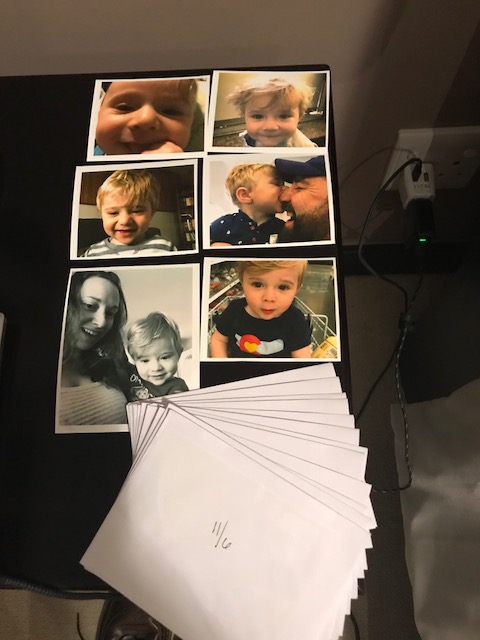
image1

That’s right, she wrote me a daily note, on the back of a picture of Wyatt – I literally get to hear from and see them each morning. Mel just blows my mind every day, and she is teaching our son to be just as caring and special as she is, what a wonderful gift to him and me.

Ok, I know, this is supposed to be a travel blog. One day here and Cape Town is all it was promised to be, a breathtaking place filled with really kind and engaging people.

Table Cloth Cape Town


“Escape from ignorance” (KP)

I’m on a boat plane.


About a year and a half ago I graduated from a leadership program, at the University of Denver, called Public Safety Leadership Development. From what I understand, and I certainly could be wrong, (correct me if this is not true) the program was born from an understanding that there was a lack of leadership education in emergency services, in the wake of the Columbine Shooting. I walked out of a six day course and felt like a changed man, a changed man who had a healthy skepticism that six days of anything could change anyone. Of course, other than heroin and business class, cause either of those things impacts one’s life forever.

So, I walked out of this program, pretty happy about how I now understood what I didn’t know, which is a realization that is invaluable. This gift was given to me by a “retired ski bum” named Kerry Plemmons, who is “escaping mediocrity one day at a time.” If I just quoted him all the time it would be an exercise in synthesized juxtapositions bathed in wine. So, anyway, because of Kerry I now understood just how little I understood. Before you balk at this being a gift, it truly is. Consult my last post to see how many people live their entire lives in the dark about their true capability.

Back to the point, I now felt like a complete moron, which is an odd realization when you have recently accomplished one of your most lofty career goals – hey Brandon, you’re bad at this. As my employee and friend Diane says, “I hated you when you started here, you were terrible” (she’s kinda blunt, it’s a western thin, apparently). Once one understands their failure, it is quite humbling. This wasn’t the first time that I had had this opportunity, I am sure at least 23 girlfriends had been glad to point out how dense I was, but like many other situations, I steered away from the criticism, finding other people who were happy to ignore my faults. It seems like this is really a death spiral, and I think a lot of people slip further and further away from what they could be, as the deviance is normalized – step by step.

So, what now? What next? Well, I must say I am a lucky asshole. Part of my luck seems to be falling into wonderful situations, despite myself. For Example:

  • My wife is certainly slumming it
  • I was lucky enough to survive 15 years as a paramedic, fairly unscathed – which many are not able to do.
  • I somehow walked (crawled) away from getting hit by a monster truck – seriously
  • I’m the father of this amazing little kid that learned how to shake my hand. They were right, fatherhood is like having a really cool dog that learns to talk (and shake hands!!)

In line with this theme, Kerry Plemmons was nice enough to meet me for coffee, and he said “get an EMBA.” He may have said “get and EMBA, dummy.” That sounds more like him. Honestly I had to google the E, not really understanding the whole thing. Initially I thought, I’m not a businessman, why would I do this? But then I remembered those 6 days with Kerry, and their effect on me. Could this be the road from understanding my lack of capability to actual capability? Seemed like a decent idea, and I did have a huge pile of cash in my mattress for a rainy day, or private school degree, so what the hell.

Honestly, I imagined I would fail out within a month or two, or maybe vomit on the shoes of the person sitting next to me. I forgot what happens when you have the privilege of sitting in a room of fantastically intelligent people, participating in the learning process, while led by dynamic and engaging professors. Rising to the occasion is a pretty cool thing, it’s really a testament to a group’s ability to out perform an individual, and so far, I haven’t failed out.

I met an incredible group of people, who are as diverse as they are interesting and capable. We have spent the last year together, learning the science of leadership, finance and economics, strategy, marketing, and breakfast connoisseurship. I think I have developed lifelong friendships, but more importantly, I have been an individual who was made greater by a team. What a cool feeling.

There is a guy reading this post, over my shoulder, as I type it on a flight from Denver to Frankfurt – its OK man, I don’t care. In a few (7) hours I will be in Frankfurt, which is nowhere near my destination of Cape Town, South Africa. But someday I hope to eventually get there, with my cohort of EMBA students, and we will have the experience of a lifetime, while also operating at a greater capability than any of us are capable of individually.

I saw Kerry in the hall today, it’s been 18 months since I walked out of that training, “a changed man.” Well, Kerry, I am on the road to understanding what I now know I don’t know, thanks for the push and the gift of understanding.


You don’t know what you don’t know

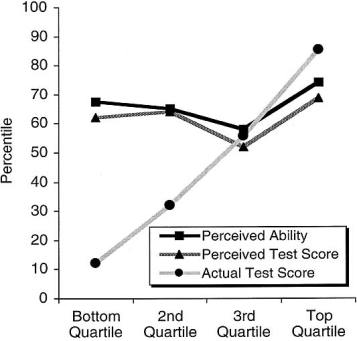
I was recently exposed to empirical evidence related to a concept that I think many people are aware of. The idea that education removes a veil of ignorance to which students were not previously aware. The “you don’t know what you don’t know theory.” Anyone who has endeavored to better understand a particular topic will recognize this feeling. Just as you begin to believe you are an expert, you have an epiphany and realize how truly incompetent you are. Not to controversial of a theory, and generally a good thing to remember when you think you are an expert at something.

More interesting is the research that surrounds this concept, primarily put forth by Justin Kruger and David Dunning. Looking at a variety of skills (cognitive, humor, grammar) they found that subject’s perceptions where wildly inconsistent with their actual performance. More fascinating was that even after being assessed, poor performers had a perception of much higher performance. They also found that as participants were educated, their impression of their capability normalized.

S_psp7761121fig2a

So, what’s the moral of this story, comically one could only feel confident in knowing about something if they feel like they aren’t that good at it. Probably the real take home lesson is education is important, not only to increase ones understanding of a topic, but to actually perceive an entire topic, it’s true scope.

During my career I have, on many occasions, been that guy who thinks he knows all there is to know. We all interact with those individuals in our personal and professional lives, and it’s often cringe worthy. In my opinion, emergency services happens to have more than our fair share of this behavior, which can be crippling to an individual’s or agency’s success. Heed the warning of Kruger and Dunning and don’t be this person. If you are a manager, identify these individuals and provide them with the education and experience that they need. The good news is that we know how to fix this, recognition and access to quality education.

Unskilled and Unaware of It: How Difficulties in Recognizing One’s Own Incompetence Lead to Inflated Self-Assessments. (n.d.). Retrieved October 31, 2017, from https://www.superfrink.net/athenaeum/www.apa.org/journals/psp/psp7761121.html


My First Post

This is, apparently, the method in which I can subject you to essentially feeling a fleeting nuance of guilt for knowing that I write things, but not actually reading them. This idea is what makes it fairly easy to write a blog, believing that it will not be read. If for some reason you are interested in my stream of consciousness, well, here it is. I do not intend to say anything groundbreaking, I hear that the average Nobel winners age is 42, so I have some time.

In 2016 I had a son, started graduate school, and generally pivoted towards being an actual adult. I am one week from traveling to Africa, without that son, in an effort to finish said graduate degree. I have been a paramedic, and had a limited idea of what the future held, for the last 18 years. Today, I have no idea what the future may hold, but the possibilities seem endless. What a wonderfully terrifying place to be at 38. A place I could never have envisioned just 2 years ago.

So, at 1130 at night, filled with excitement and anxiety, I decided to start a blog. Subjecting you to the musings of my life, which will probably include things like:

  • My small Italian Lawyer Wife from Chicago (she hits me)
  • Paramedics, and their superiority to fire suppression officials
  • New Orleans – its wonderful people – and their interest in destroying themselves
  • My Kid – everything about him, including bowel movements (you asked)
  • Our broken health system – no, not because of the ACA
  • Travels
  • Interesting people – those I know and those I don’t
  • Books (non-coloring)
  • Bad drivers
  • Outdoor stuff (fishing, skiing, blah blah – Colorado)

Basically, I want to be Anthony Bourdain when I grow up, without the cooking – and heroin – and tattoos – and that odd smirk.  But otherwise, just like him.

This will probably be the last thing I write in here, to the one person that made it to the end, what were you thinking?